The Cancellation Nobody Chose: How a Declined Card Quietly Deletes B2B Revenue You Already Earned
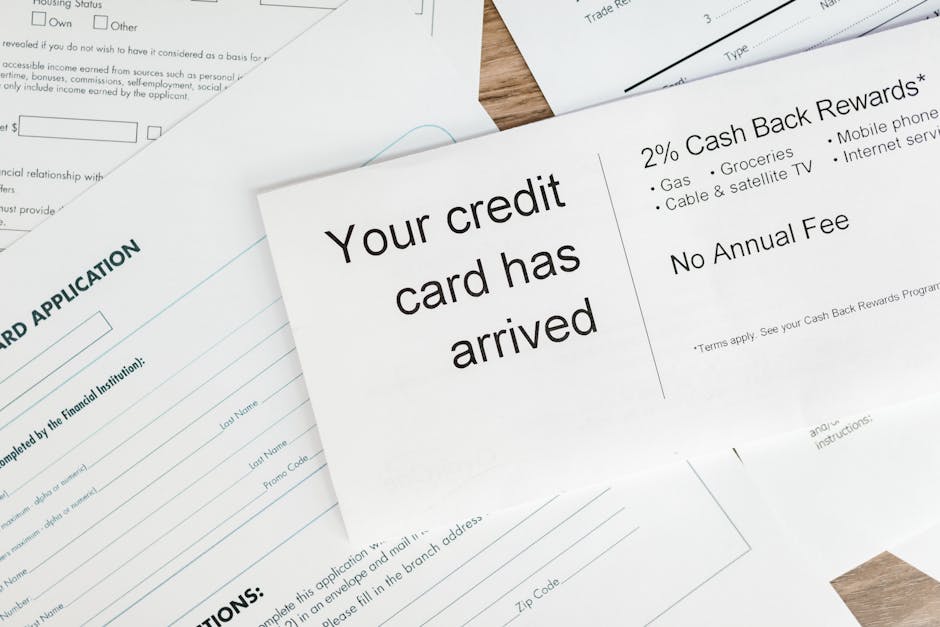
Open last quarter's churn report and find the account that makes no sense. The one with the healthy usage, the champion who replied to your last check-in with a thumbs up, the renewal your CSM had marked green. Gone anyway. Read the reason code next to it and you won't find "switched to a competitor" or "budget cut." You'll find something duller and stranger: payment failed.
That customer didn't fire you. Their card did.
Somewhere in the last thirty days a corporate card got reissued after a fraud alert, or expired during a finance reorg, or hit a limit the week your charge landed. The retry ran, failed again, and a system quietly flipped the account to canceled. Nobody on your side decided to lose that revenue. Nobody on their side decided to leave. It just evaporated.
For Customer Success Leaders, RevOps Teams, and Finance-adjacent Revenue Owners, this is a look at the churn category almost nobody is actively working: involuntary churn, the revenue you already earned and then lost to a payment system rather than a decision. It is bigger than most teams think, it got worse when B2B went self-serve, and it is one of the few churn problems you can fix with plumbing instead of persuasion.
The number hiding inside your churn number
Most companies track one churn figure and treat it as a single thing. It is actually two very different things wearing the same label.
Voluntary churn is a decision. A customer weighed the value, found it wanting, and left. That is the churn every playbook is built to fight: better onboarding, health scores, QBRs, save offers.
Involuntary churn is an accident. The customer never intended to go anywhere. A payment failed and a system did the rest.
Here's what should stop you: across subscription businesses, involuntary churn accounts for roughly a fifth to two-fifths of total churn, according to Recurly's research, and some analyses put the share even higher. So somewhere between one in five and two in five of the logos you lost last year, you didn't lose to a competitor, a budget freeze, or a bad experience. You lost them to a declined transaction.
Recurly has estimated that failed subscription payments put well over one hundred billion dollars of revenue at risk across the industry in a single year. That's not money left on the table by weak marketing. That's money already won, already contracted, already using the product, deleted after the fact.
If you run a save motion against your voluntary churn but do nothing systematic about the involuntary kind, you are fighting hard for the deals that are hardest to keep while quietly waving goodbye to the ones that wanted to stay.
Why this became a B2B problem when it used to be a B2C one
For years, involuntary churn was a consumer-subscription headache. Streaming services, meal kits, the gym app you forgot you had. Classic B2B didn't worry about it much, because classic B2B billed on invoices. Net-30 terms, a PO, an AP department that paid on a schedule. Cards barely entered the picture.
Then B2B changed how it sells.
Product-led growth, self-serve signups, and credit-card checkout pushed a huge share of B2B revenue onto exactly the payment rails that fail. Forrester expects more than half of large B2B purchases, the ones above a million dollars, to move through digital self-serve channels like vendor sites and marketplaces. The smaller stuff, the team plans and seat expansions and usage overages, already runs on a card somebody typed in during a free trial and never thought about again.
So B2B imported a consumer problem without building the muscle consumers' vendors developed to handle it. Your enterprise accounts on annual invoices are basically immune. But every SMB and mid-market customer paying by card is exposed, and that base is growing every quarter you lean harder into self-serve.
The failure rates are real and they're not tiny. Payment-industry benchmarks put corporate-card decline rates on recurring B2B charges at around four to six percent, versus eight to fifteen percent for consumer debit and prepaid cards, with cross-border charges failing at roughly one and a half to two times the domestic rate. A four percent monthly failure rate doesn't sound alarming until you compound it across a year and a book of thousands of card-billed accounts. The leak is small at any single moment and enormous over time.
The reasons cards fail have nothing to do with your product
This is the part that makes involuntary churn feel almost unfair. The customer loves you. The card still fails. Common causes, none of which you can fix by improving the software:
- The card expired and nobody updated it, because the person who entered it left the company or simply never saw the dunning email.
- The bank flagged the recurring charge as suspicious and declined it, especially on a card that was recently reissued after fraud.
- A temporary hold, a spending limit, or an insufficient balance hit in the exact window your charge ran.
- The card was reissued with a new number and the subscription is still pointing at the old one.
- A finance team consolidated cards during a reorg and forgot which vendors were billing the old one.
Notice the pattern. Every one of these is a plumbing failure, not a value judgment. And every one is recoverable if you catch it in time and make it easy to fix. Which is precisely why involuntary churn is the most winnable churn you have. You're not trying to change someone's mind. You're trying to help someone who already wants to pay you actually pay you.
Recovery is a system, and most teams don't have one
Here's the encouraging part and the uncomfortable part in the same breath. The gap between doing nothing and doing this well is gigantic.
Churnkey's 2025 State of Retention report found that when involuntary churn is left to a default setup, only about eleven percent of it gets recovered. Turn on a real dunning process and that jumps: their data showed dunning campaigns recovering around a third of failed payments, and dunning emails alone recovering roughly four in ten failures. Broader payment-recovery benchmarks land in a similar place, with a median recovery rate near forty-eight percent and top-quartile operators pulling back somewhere between fifty-five and seventy percent of failed charges.
Sit with the spread. The floor is eleven percent. The ceiling is seventy. That difference isn't talent or luck. It's whether a system exists.
The mechanics that move the number are unglamorous:
Smart retry timing beats fixed retry timing. Retrying a failed charge at 2 a.m. on the same day it failed is close to useless. Retrying based on the failure reason, waiting for a payday, avoiding the exact window that already failed, recovers far more. Some analyses show intelligent, adaptive retry logic roughly tripling recovery versus a single naive retry.
Card updater services quietly fix expirations before they bite. The major card networks offer account-updater programs that refresh expired or reissued card numbers automatically. A large slice of failures are just stale numbers, and this catches many of them before a human ever sees a dunning email.
Pre-dunning beats dunning. Emailing a customer a week before a card is set to expire, while everything is still working, converts far better than chasing them after the charge has already failed and the mood has turned.
None of this requires the customer to be re-sold. It requires someone to have set the plumbing up on purpose.
The real reason it goes unfixed: nobody owns it
If involuntary churn is this recoverable, why does it sit there bleeding? Because it falls in the seam between three teams, and seams are where accountability goes to die.
Finance sees the failed transactions but reads them as a billing operations detail, not a retention emergency. Customer Success owns retention but is looking at usage, sentiment, and adoption, not the payments ledger. The RevOps or billing team runs the subscription system but is measured on whether invoices go out, not on how many silently bounce. Ask any of the three who is responsible for recovering a failed B2B card payment and you will usually get a pause, then a version of "I assumed the other team had that."
So a customer who wanted to stay slips through the seam. The failed charge isn't on anyone's dashboard as a churn risk. The dunning sequence, if it exists at all, is whatever the billing platform shipped with by default. And the number that would embarrass everyone, the percentage of churn that was pure payment failure, isn't a number anyone is asked to report.
The fix starts by making it somebody's job, with a target, on a dashboard, reviewed like any other retention metric. Recovered involuntary churn is real net revenue retention. It should be treated like it.
A framework you can run this quarter
You can make progress on this in a single quarter without a big platform migration. Here's a sequence that holds up.
Split your churn in two and put a dollar figure on the involuntary half
Before you fix anything, measure it. Pull the last four quarters of churned accounts and tag each one: voluntary decision, or payment failure. Most teams have never done this cleanly, and the first look is usually a shock. Convert the involuntary bucket to annual recurring revenue. That single number is your business case for everything that follows, and it is almost always larger than the effort required to recover a big chunk of it.
Give it one owner and one target
Pick a person. RevOps or a billing-ops lead is often the cleanest fit, with Customer Success as the partner on outreach. Set a recovery-rate target, something like moving from your current baseline to fifty percent within two quarters, and put it on a dashboard that leadership actually looks at. An orphaned problem stays broken. An owned one gets better.
Fix the retry logic and turn on a card updater
These are the two highest-impact plumbing changes and both are usually a configuration, not a build. Move from a fixed retry schedule to failure-aware retries. Enroll in the card networks' account-updater services so expired and reissued cards refresh automatically. For many teams this alone recovers a meaningful share of what was leaking.
Treat dunning like customer success, not collections
The messages you send when a payment fails are customer communications, and right now most of them read like a parking ticket. Rewrite them in your brand voice. Make the update-payment link one click. Send a friendly pre-expiration nudge while everything still works. For higher-value accounts, have a human reach out rather than leaving it to an automated sequence, because a five-figure account is worth a two-minute email from a real person.
Move your best card-billed accounts off cards
For your largest self-serve accounts, the ones that grew into real money, proactively offer to convert them to invoicing or ACH. It reduces their failure exposure to nearly zero and signals that you treat them as the significant customer they have become. This is the one structural fix that removes the risk entirely rather than just recovering from it.
Where the honesty has to come in
A few caveats, because this is a real problem and not a magic lever.
Recovering an involuntary churn isn't the same as keeping a happy customer. Some payment failures are quiet exits, where a customer who was going to leave simply lets the card lapse rather than clicking cancel. Chasing those aggressively can look desperate, and forcing a recovery on someone who has mentally left just delays a churn and sours the relationship. Good judgment means recovering the ones who want to stay, not strong-arming the ones who don't.
The numbers here also come largely from payment and subscription vendors who sell recovery tools, so read the top-end recovery rates as directional rather than guaranteed. Your mix of card types, customer sizes, and geographies will move your ceiling around. And none of this substitutes for the harder work on voluntary churn, which is still the bigger and more important battle for most companies.
But that's exactly the argument for doing the involuntary work. It's the cheaper battle. It doesn't require you to change anyone's mind, improve the product, or win a save call. It requires you to notice a category of loss you have been ignoring, give it to someone, and fix some plumbing.
The line worth measuring
Most retention strategy is aimed at the customers who are thinking about leaving. This is about the ones who never were, and lost anyway.
Go pull the report. Tag last year's churn into decisions and accidents. Find out what fraction of your lost revenue was a card, not a choice. If that number is anywhere near a quarter of your churn, and for a lot of card-billed B2B businesses it will be, then you have been running a save motion aimed at the wrong customers.
The ones you can most easily keep are the ones who already wanted to stay. They just need you to make it possible for them to pay you.
Emily Rodriguez
Content Marketing Lead
Emily is passionate about creating content that drives business results and builds lasting customer relationships.
View all articlesNewsletter
Get the latest business insights delivered to your inbox.
Related Articles

The Melting Pipeline: Why Your B2B Deals Now Take 22% Longer to Close — and the 2026 Playbook to Win Back Time
The median B2B sales cycle has stretched 22% since 2022, and most teams never manage the one number deciding whether pipeline becomes revenue: time. Why deals melt, and the five-part framework to win back velocity in 2026.

AI-Driven Customer Success: How B2B Teams Are Turning Retention Into a Precision Science
The customer success platforms market is surging toward $9.17 billion by 2032 as AI-driven retention strategies deliver up to 25% churn reduction and $3.50 return for every dollar invested. Here's how leading B2B teams are making the shift from reactive account management to predictive intelligence.

The Phantom Pipeline: Why Your 4x Coverage Keeps Missing the Quarter — and the Forecast Forensics Quietly Fixing It in 2026
The median B2B tech company carries 3.4x raw pipeline coverage but only 1.8x weighted — and that 1.6x phantom gap is why forecasts keep missing. Here is the forecast forensics discipline separating real pipeline from fiction in 2026.